

Vanadium Dioxide
VO₂Vanadium dioxide (VO₂) thermochromic thin films — VanaM's signature material — deposited by RF magnetron sputtering below 1.0 × 10⁻⁶ Torr. Films on sapphire show (-402)-oriented polycrystallinity with a resistance ON/OFF ratio above 10⁴ and an insulator–metal transition below 60 °C, enabling smart windows, IR modulation and thermal switching. Sputtering targets: 99.99 % purity, 4 in.
Specifications
Thin-Film Specifications
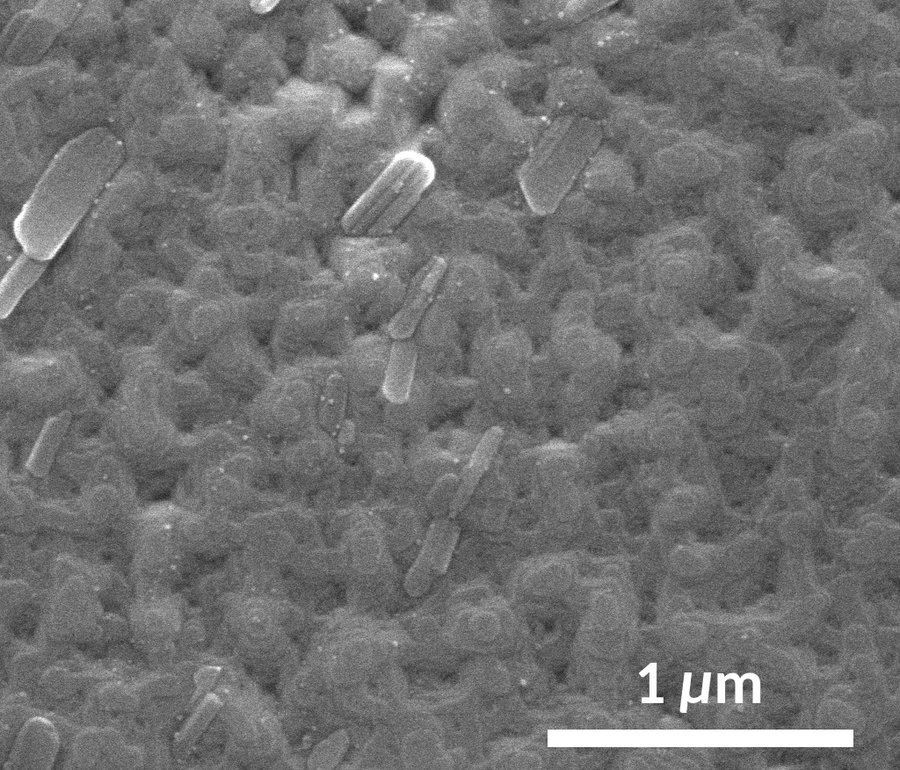


- Film-coated by RF magnetron sputtering vacuum < 1.0 × 10⁻⁶ Torr
- Substrate : Sapphire
- Thickness : 150 nm
- Film Crystallinity : (-402) oriented polycrystals
- RMS Roughness : 6.917 nm
- Resistance ON/OFF ratio : > 1.0 × 10⁴
- Transition temperature : < 60 °C
- Applications : Smart Windows, Infrared Modulators, Thermal and RF Switching
Target Specifications
- Target Material : Vanadium Dioxide (VO2)
- Purity : 99.99%
- Diameter : 4”
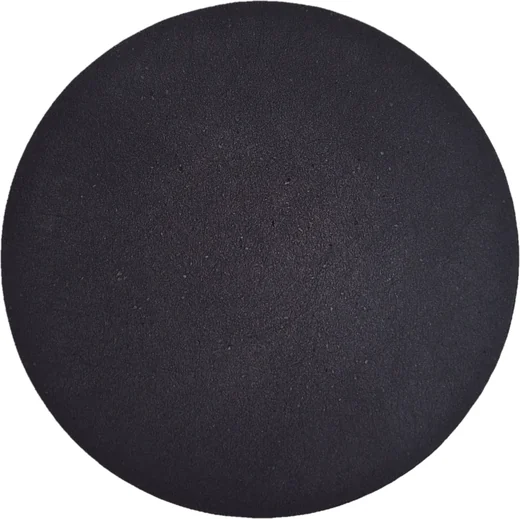 Target
FAQ
Frequently asked questions
Does VanaM supply VO₂ thin films with a temperature-driven resistance transition? +
VanaM develops and offers custom-deposition inquiries for VO₂ (vanadium dioxide), an oxide associated with a temperature-dependent insulator-to-metal transition. The company publishes representative film characterization on its Materials Library page, including a sample's thickness, resistance ON/OFF behavior and transition-related data under specified preparation conditions. These values describe example samples rather than universal guarantees for all substrates or orders. A VO₂ film's switching response can depend on crystallinity, stoichiometry, stress, thickness, substrate, thermal history and measurement method. For an inquiry, specify the substrate and size, target thickness, desired transition-temperature range, resistance change, hysteresis and intended sensing or optical use. VanaM can then assess whether a listed process or a new optimization run is appropriate.
Can the transition temperature of VO₂ be adjusted by tungsten doping? +
Tungsten doping is one materials-engineering approach investigated for tuning VO₂ phase-transition behavior. However, the relationship between nominal W content and measured transition temperature depends on the deposition route, incorporated dopant concentration, crystallinity, substrate and thermal treatment. A custom W-doped VO₂ request should therefore be treated as a materials-development and qualification project, not as a guarantee of a particular switching point. Useful requirements include the target transition-temperature interval, acceptable hysteresis width, optical or electrical measurement method, thickness and substrate. VanaM can review the doping and characterization concept as part of its VO₂ development program. Any promised transition temperature, repeatability or long-term stability must follow actual measurement and agreed acceptance criteria.